Time to rethink VMware? Why Broadcom’s pricing shock is driving organisations to Red Hat
Broadcom’s acquisition of VMware has triggered a pricing shock across UK enterprise IT. For many organisations, Red Hat OpenShift Virtualisation has emerged as the answer.
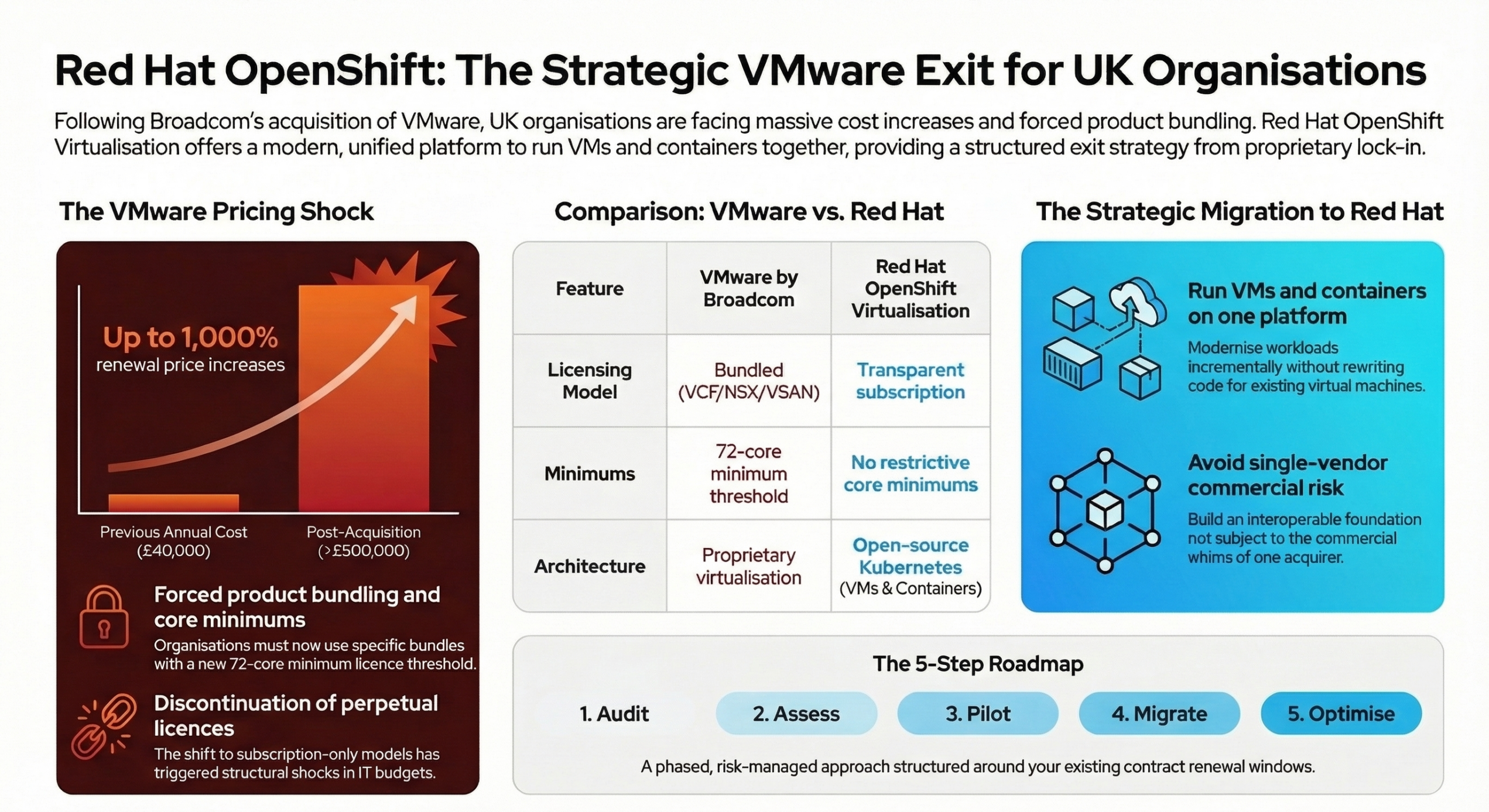
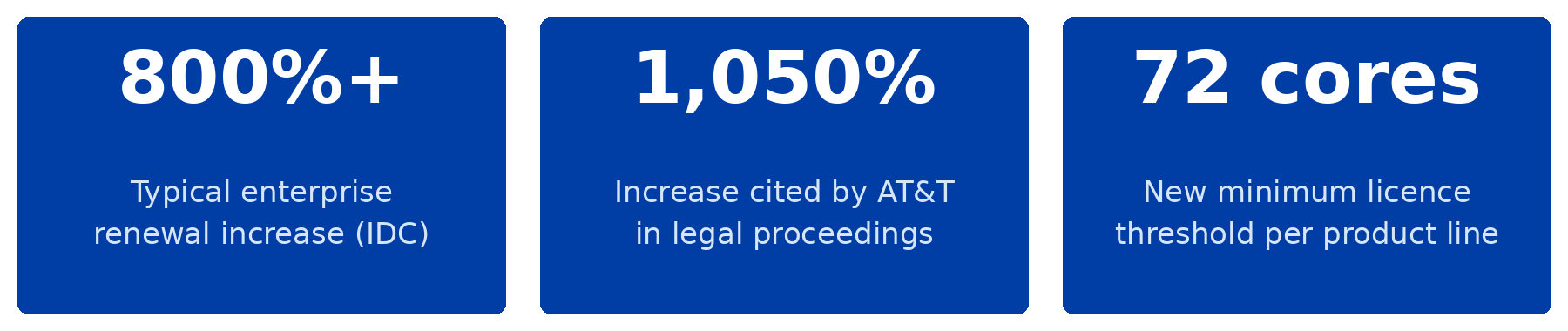
When Broadcom completed its $61 billion acquisition of VMware in late 2023, many IT leaders braced themselves. What followed confirmed their fears. Perpetual licences were discontinued, product portfolios were consolidated into expensive bundles, and renewal quotes began landing on desks across the UK with price increases that, in some cases, exceeded 1,000%. For organisations that had built their virtualisation strategy around VMware over the past decade, this was not a gentle market adjustment — it was a structural shock.
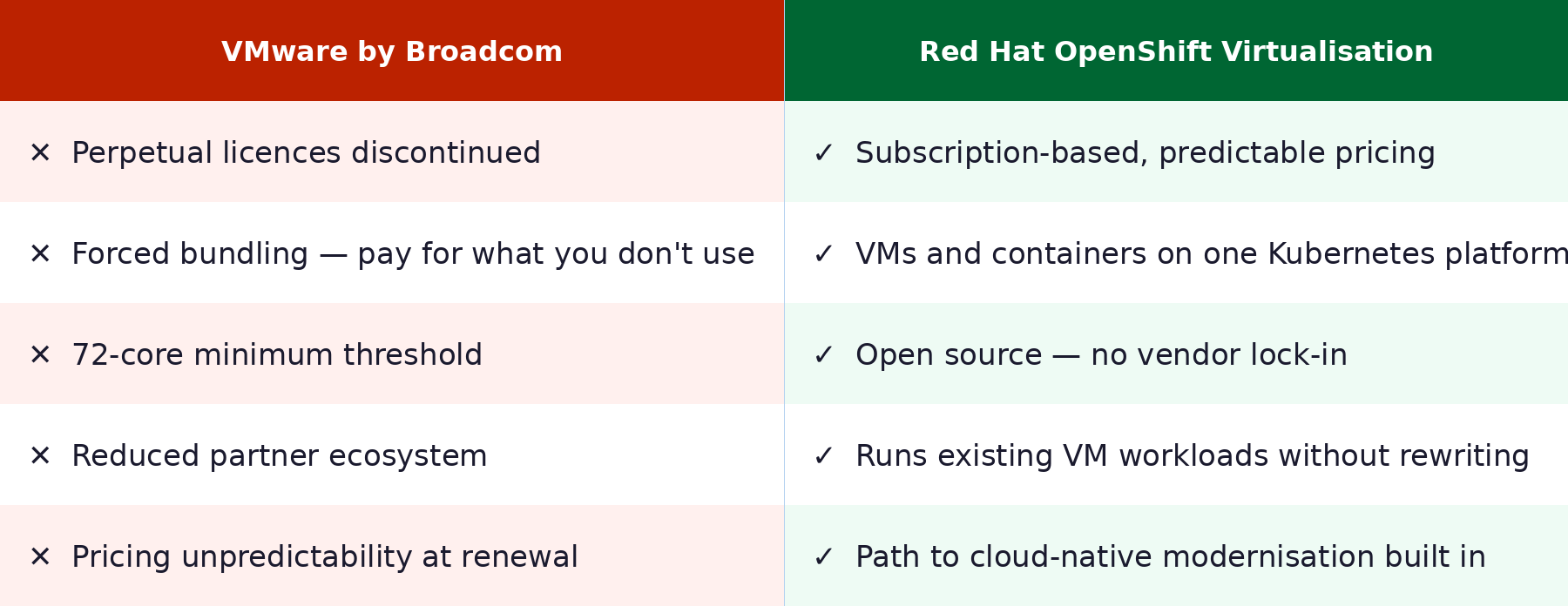
The practical consequences have been felt broadly. Customers who previously purchased standalone vSphere and vCenter licences now find themselves required to subscribe to VMware Cloud Foundation — a bundle that includes vSAN, Tanzu Kubernetes and NSX, whether they need those components or not. A minimum 72-core licence threshold introduced in 2025 has compounded the pressure further, particularly for organisations running lean, efficient environments. One British university found itself facing an increase from £40,000 to £500,000 per year. These are not outliers; they are increasingly the norm.
The VMware pricing shock at a glance
Key figures and a practical migration roadmap for UK organisations
Reported cost increases post-Broadcom acquisition:
Migration roadmap: VMware to Red Hat OpenShift Virtualisation
VMware by Broadcom vs Red Hat OpenShift Virtualisation
So, where are organisations turning?
For many, Red Hat OpenShift Virtualisation has emerged as the most compelling alternative. Built on Kubernetes and underpinned by open-source principles, it allows organisations to run existing virtual machine workloads alongside modern containerised applications — on a single platform, without rewriting a line of code. The licensing model is transparent and subscription-based, without the bundled compulsion of Broadcom’s new structure. Crucially, it also provides a natural modernisation pathway: workloads can be migrated incrementally, giving IT teams the time and flexibility to evolve rather than being forced into a wholesale rip-and-replace.
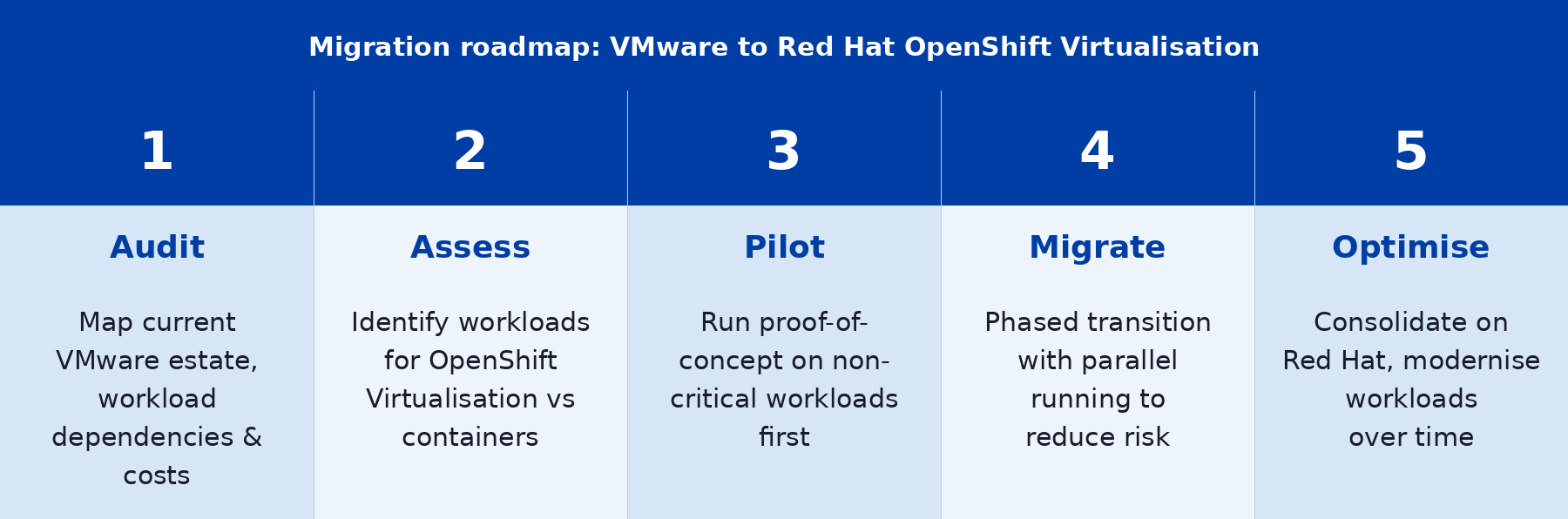
“The organisations that will fare best are those that treat this moment not just as a cost problem, but as a strategic opportunity to build a more open, resilient infrastructure for the decade ahead.” Share on XThat said, migration is not a trivial undertaking. A thorough audit of your VMware estate, workloads, dependencies, utilisation, and existing contracts is the essential first step. Not every workload will move cleanly, and timing matters enormously: organisations approaching renewal windows have more negotiating leverage than those who have already signed.
Northdoor’s infrastructure and Cloud practice works with clients across all sectors to build these business cases and execute migrations in a phased, risk-managed way.
The Broadcom-VMware story is a reminder that no technology relationship is permanent, and that concentration of infrastructure on a single proprietary vendor always carries risk. Whatever decisions organisations make in the near term, building a more open, interoperable foundation — one that isn’t subject to the commercial whims of any single acquirer is a sound long-term objective. The price shock is real. But for many organisations, it may also prove to be the catalyst for long-overdue change.
To discuss your VMware licensing situation and explore your options, email us, complete our contact form, or call 020 7448 8500.