When data is fragmented, the whole business feels it
Most organisations don’t have a data problem. They have a visibility problem.
Data sits across multiple systems and departments. Teams work from different versions of the same numbers. Reporting takes longer than it should. When leadership asks a simple business question, getting a straight answer can take days.
In addition, the impact shows up in places you might not expect. Compliance and governance get harder to manage. AI initiatives stall because the underlying data isn’t clean enough to build on. As a result, technology that was supposed to deliver returns ends up creating more complexity instead.
None of this is inevitable. However, it doesn’t fix itself either.
Before investing in technology, establish a clear data strategy
The instinct is often to buy something new: a better platform, a more sophisticated tool. In practice, the technology is rarely the problem.
What’s missing is a clear picture of what data exists, where it lives, who owns it, and how it connects to what the business is trying to achieve. Without that foundation, even the most capable technology will underperform.
What data do you actually have?
Many organisations are surprised by the answer. Data accumulates over years, spread across systems that were never designed to work together. Therefore, before any strategy conversation can begin, organisations need a clear inventory of what they’re working with.
Where does it live and who owns it?
Ownership gaps are common. Data sits in systems that teams use but nobody formally maintains. As a result, it becomes unreliable over time, and the business stops trusting it.
How does it connect to your business objectives?
This is where most data conversations fall short. Technical teams understand the data. Business teams understand the objectives. However, the two rarely come together in a structured way before a project is already under way.
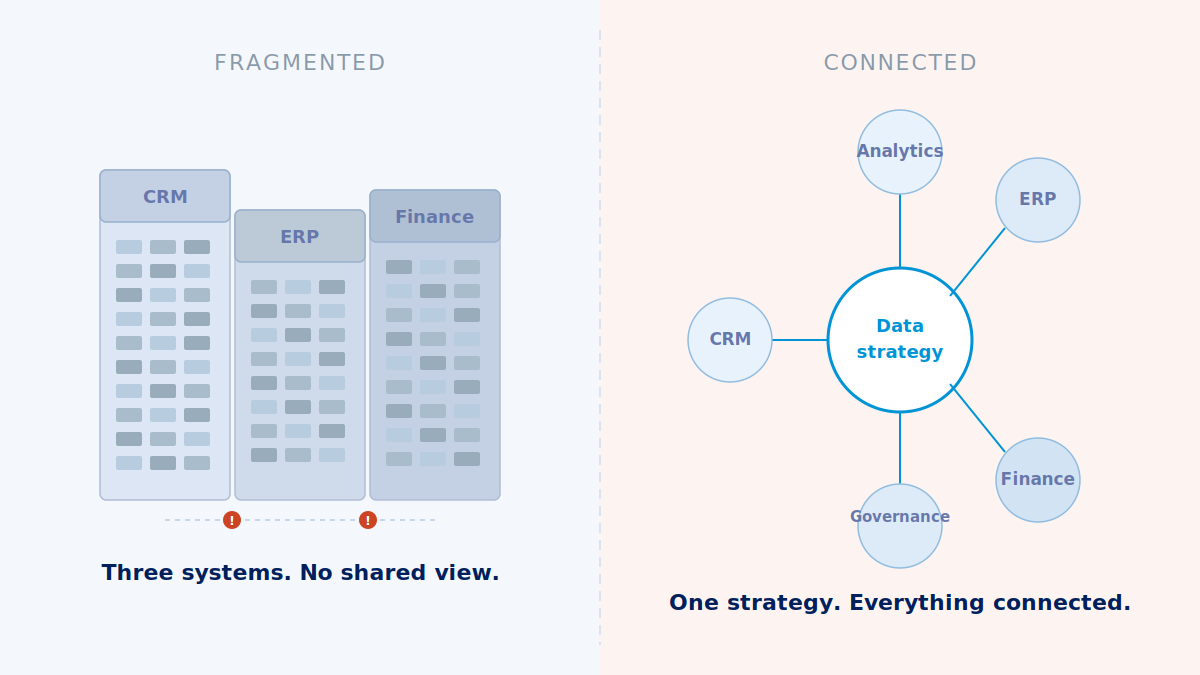
How a Data and Analytics Workshop supports your data strategy
Rather than jumping straight to solutions, a structured workshop brings business and IT stakeholders into the same room. Together, they build a shared understanding of where things stand today.
It surfaces the real barriers, not just the obvious ones. It creates alignment on what success looks like. In addition, it produces something most organisations lack: a prioritised roadmap tied to business outcomes, not just technical capability.
The goal isn’t a longer list of projects. It’s a clearer sense of where to focus first, and why.
Who this is for
Senior IT and business leaders, including Heads of Data, IT Directors and CDOs, at mid-to-large UK organisations looking to improve how data supports decision-making and growth.
A practical first step in any data transformation
Data transformation projects that skip this stage often struggle. The technology works, but the strategy isn’t there to direct it. The result is more investment with less return.
A Data and Analytics Workshop is a relatively small commitment. It can, however, change the trajectory of a much larger programme. For organisations that are serious about getting more value from their data, it’s usually the most useful place to start.
For further guidance on data governance best practice, the ICO’s accountability and governance framework is a useful reference.
For more information about the workshop, please contact us.