KnowBe4: Defending against human-activated risk

Partner with Northdoor and KnowBe4 to transform your security culture and empower your people

Are you ready to get in touch?

Request a Call back

The human element in cyber security

Phishing and social engineering remain the top cyber threats facing organisations today. According to the 2024 Verizon Data Breach Investigations Report, 68% of all breaches involve the human element, and email accounts for 98% of attack vectors in social engineering cases. Industry research confirms that most C-level leaders now prioritise building a strong security culture.

Addressing these risks requires more than traditional defences; organisations need platforms that target human-activated threats and empower employees to recognise and respond to attacks.

As a trusted Northdoor partner, KnowBe4 empowers employees to become active defenders against social engineering threats.

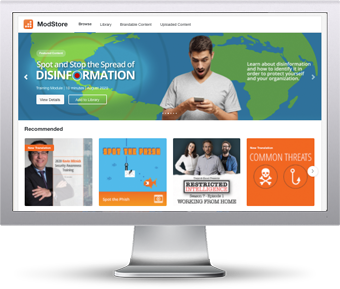
Computer screen displaying KnowBe4’s ModStore training portal.

Strengthen your human firewall

No email security system is foolproof. Technology alone isn’t enough. The KnowBe4 Human Risk Management (HRM) platform is built around human behaviour, helping organisations strengthen their “human firewall” against social engineering.

The platform integrates:

  • Cloud email security that complements your existing stack
  • Advanced risk scoring to identify vulnerable users
  • Security awareness training tailored to individual risk profiles
  • Real-time coaching that reinforces policy adherence

By aggregating data from your current security systems, KnowBe4 delivers personalised, adaptive controls that engage users as active participants in your cyber defence.

Organisations using KnowBe4 have reduced their Phish-prone Percentage from over 30% to less than 5% within 12 months—creating a resilient human layer against sophisticated attacks.  (Phish-prone Percentage measures the likelihood that users will fall for a phishing email.)

Use AI to predict and prevent attacks

KnowBe4’s platform evolves with the threat landscape. It’s “Artificial Intelligence Defense Agents, known as AIDA”, automate and enhance human risk management by:

  • Generating realistic phishing simulations and interactive quizzes
  • Delivering personalised training based on user behaviour and risk level
  • Continuously assessing human risk using machine learning and neural networks

The Cloud Email Security product dynamically adapts policy controls to defend against inbound and outbound threats. Real-time, context-aware banners and prompts deliver teachable moments, without burdening your security team.

Respond to threats in real time

KnowBe4 helps embed users into your cyber defence strategy with tools that turn risky behaviour into learning opportunities:

  • PhishER analyses and prioritises user-reported emails, converting real-world phishing attempts into training
  • SecurityCoach delivers real-time coaching when risky behaviour is detected
  • Regular phishing simulations measure awareness and reinforce best practices


Track progress and prove ROI

KnowBe4 provides detailed reporting and analytics so you can:

  • Monitor progress over time
  • Identify areas for improvement
  • Demonstrate ROI to stakeholders

Flexible pricing options are available for organisations of all sizes.

Contact us today to learn how to strengthen your security posture and build a lasting culture of awareness.

Related solutions

Solution

Email Security Solution

Email security risks need to combine technology with human aspects

Solution

Phishing Security Test

Run a phishing security test for up to 100 users. Instantly uncover your phish-prone rate and benchmark against industry peers.

Solution

Anti-Phishing Solution

Discover how Northdoor’s anti-phishing solution can protect your business from becoming vulnerable to malicious actors and financial losses.

Videos

Risk Management" platform designed to strengthen an organisation's "human firewall"

FAQ’s

Q: What is human-activated risk in cybersecurity?

A: Human-activated risk refers to the cybersecurity threats that involve the human element. Phishing and social engineering are identified as the top cyber threats facing companies today. A significant majority of all data breaches, specifically 68%, include the human element, and email alone accounts for 98% of the attack vectors used in social engineering.

Q: Why is human-activated risk a major cybersecurity concern for companies?

A: Human-activated risk is a major concern because no email security system is perfect, and technology is just one part of the overall security posture. Organizations need a platform that goes beyond traditional security to address risks stemming from human behaviour. The majority of C-level leaders now agree that building a strong security culture is a high priority.

Q: How can organisations effectively manage human-activated risk?

A: Organisations can effectively manage human-activated risk by focusing on strengthening their “human firewall”. This involves a comprehensive approach designed with human behaviour in mind, which can combine elements such as cloud email security, advanced risk scoring, awareness training, and real-time coachingBy aggregating data from security software and systems, organisations can implement integrated, personalised, and adaptive security controls that engage users as active participants in their cyber defences. Such systems should provide an adaptive experience that evolves with the threat landscape.

Q: What are key strategies to reduce human-related cybersecurity vulnerabilities?

A: Key strategies include:

    • Educating users and making them an integral element of the cyber defence strategy.
    • Implementing security awareness training, which on average can significantly reduce an organisation’s susceptibility to phishing (e.g., from over 30% to less than 5% after 12 months).
    • Analysing and prioritising user-reported emails, transforming real-world phishing attempts into training opportunities.
    • Delivering real-time security coaching to users when risky behaviour is detected, as immediate notifications reinforce comprehension and retention of security training and established policies.
    • Utilising AI-driven agents to automate and enhance human risk management by generating realistic phishing templates and quizzes, and delivering personalised, adaptive training based on a user’s risk profile.
    • Employing machine learning and neural networks to continuously assess human risk and dynamically adapt policy controls against inbound and outbound email threats, providing real-time “teachable moments” through dynamic, context-aware banners and prompts. This multi-pronged approach allows organisations to build a fully orchestrated and effective security culture.
Interested in implementing a human-centric security strategy?

Request a demo or contact sales on: 0207 448 8500

Request a demo

Our Awards & Accreditations